Atividade Membros Da Familia Em Ingles
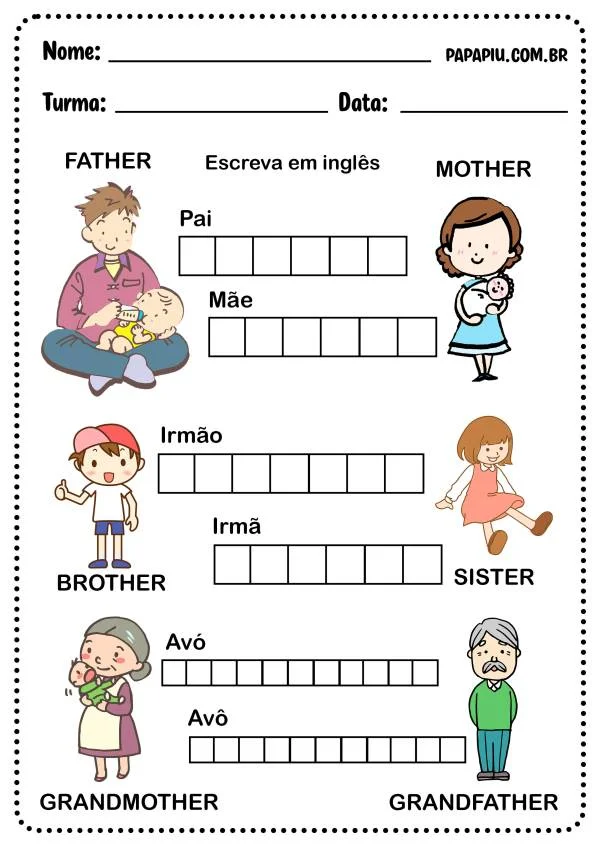
Exploring atividade membros da familia em ingles is a powerful way to strengthen bonds while building authentic English skills. Family-centered tasks create meaningful contexts for real communication, helping learners move from isolated words to natural, everyday conversations. This approach turns routine home moments into rich language practice, covering vocabulary for relatives, relationships, routines, and emotions. By focusing on shared experiences, you practice listening, speaking, reading, and writing in a low-pressure, highly relevant setting. The result is a practical, engaging path toward fluency that feels less like study and more like quality time together.
What does atividade membros da familia em ingles look like in practice?
Atividade membros da familia em ingles refers to structured or informal tasks that involve family members while targeting English language development. These activities can range from simple labeling games to complex role-plays that simulate real family scenarios. They often integrate visual supports, movement, and collaboration to keep learners engaged across ages and proficiency levels. A well-designed activity balances clear objectives with enjoyment, so the language feels useful rather than abstract. Whether you are a parent, teacher, or self-directed learner, framing these tasks as shared projects encourages consistent participation. The key is to align each atividade membros da familia em ingles with everyday routines so the language sticks beyond the classroom.
How can you start with basic vocabulary and roles?
Begin by building a solid foundation of family vocabulary and relationship terms. Create a word bank that includes parents, siblings, grandparents, aunts, uncles, cousins, and other relatives, along with action words like help, cook, talk, and celebrate. Use flashcards, sticky notes, or digital labels to associate each term with a photo or a real-life face. For younger learners, incorporate songs and chants that repeat these words in simple rhythms. As you practice atividade membros da familia em ingles, assign rotating roles such as “daily helper,” “storyteller,” or “timekeeper” to give each person a clear English-speaking responsibility. This not only reinforces vocabulary but also builds confidence in using words in context.

What are effective conversation starters for family members?
Meaningful interaction is at the heart of any atividade membros da familia em ingles. Prepare open-ended questions that invite personal stories and opinions, such as “What was your favorite childhood memory?” or “If you could travel with any family member, who would it be and why?” Use conversation cue cards to ensure everyone gets a turn to speak without interruption. Encourage follow-up questions to deepen responses, pushing learners to use connectors like because, although, and usually. For more advanced practice, introduce problem-solving prompts that require negotiating solutions in English, such as planning a family event within a budget. These scenarios develop both fluency and pragmatic skills, making the language feel alive and functional.
How can storytelling and role-play strengthen family language time?
Storytelling and role-play are dynamic ways to practice narrative skills, sequencing, and emotional expression within a atividade membros da familia em ingles framework. Create a family story jar with prompts like “The day we discovered a hidden garden” or “A lost pet returns with a surprise.” Each person adds a sentence or paragraph in English, building a collaborative tale. For role-play, simulate everyday situations such as planning a weekend trip, discussing household rules, or resolving a disagreement. Assign characters that reflect real family dynamics to increase relevance and emotional investment. These activities naturally incorporate past and future tenses, descriptive language, and polite expressions, all while keeping participants actively engaged.
Which games make learning family-related English more engaging?
Games transform routine practice into a lively atividade membros da familia em ingles experience. Try “Family Tree Bingo,” where players match descriptions to relatives on their cards, or “Two Truths and a Lie” about family members to practice forming correct sentences and questioning skills. Board games adapted with English prompts can review relationships, daily routines, and responsibilities. Digital word association games can also be useful, especially for remote or hybrid family settings. Keep scores in English, use simple phrases like “Your turn” and “Great job,” and celebrate small wins to maintain motivation. The goal is consistent exposure in a context that feels like play rather than formal study.

How can you track progress and keep everyone motivated?
Tracking progress helps a atividade membros da familia em ingles initiative feel rewarding and structured. Use simple journals where each family member writes or records one sentence about a new word learned or a conversation had each week. Create visual progress charts with milestones, such as “Learned ten new family relationship words” or “Completed five role-plays without switching to the native language.” Celebrate achievements with small incentives, like choosing the next family movie in English or baking a treat together. Regular reflection sessions allow everyone to share what worked, what was challenging, and what they want to explore next. This continuous feedback loop keeps motivation high and learning aligned with real-life goals.
Can these activities adapt to different ages and levels?
One of the greatest strengths of atividade membros da familia em ingles is its flexibility across ages and proficiency levels. For young children, focus on listening, repetition, and playful interaction with songs and movement. Teens and adults can handle more complex discussions, debates, and project-based tasks that require planning and critical thinking. Within the same family, pair stronger English speakers with beginners to create peer support and reduce anxiety. Adjust sentence length, vocabulary difficulty, and interaction style to meet individual needs while keeping the overall activity cohesive. By designing layered tasks, you ensure that everyone contributes and progresses at a comfortable pace.
What role does culture play in family-centered English learning?
Culture enriches atividade membros da familia em ingles by connecting language to traditions, values, and daily life. Explore English-language versions of family recipes, holiday stories, and songs from different English-speaking communities. Discuss how family roles and celebrations compare across cultures, using respectful and curious language. Invite family members to share their own cultural perspectives in English, creating a bridge between heritage and global understanding. These conversations build not only language skills but also empathy and intercultural competence. When learners see language as a living tool for connection, they engage more deeply and retain knowledge longer.

How can you maintain consistency and turn practice into a habit?
Consistency turns occasional atividade membros da familia em ingles into lasting language habits. Set a regular time, such as a weekly family hour or a short daily check-in, to keep practice predictable. Rotate activity types to cover vocabulary, conversation, reading, and writing so skills develop evenly. Use reminders, simple agendas, and visual cues to keep everyone on track without pressure. Encourage informal moments, like labeling household items or narrating daily actions in English, to extend learning beyond dedicated sessions. Over time, these small, steady efforts build automaticity and make English a natural part of family life.
What are common challenges and how can you overcome them?
Challenges in a atividade membros da familia em ingles setting may include mixed proficiency levels, limited confidence, or time constraints. To address varied levels, design tasks with optional difficulty layers, such as choosing between simple phrases and more detailed responses. For shyness or hesitation, start with low-stakes activities like matching games or writing short notes before moving to speaking. When schedules are tight, break activities into five- or ten-minute micro-tasks that fit into existing routines. Celebrate effort rather than perfection to keep anxiety low and participation high. With patience and creative adjustments, these obstacles become opportunities for deeper bonding and language growth.
What are the long-term benefits of learning English through family activities?
Beyond vocabulary and grammar, atividade membros da familia em ingles nurtures communication patterns that support lifelong language use. Family members learn to express emotions, negotiate, and collaborate in English, building both linguistic and social competence. Children develop positive associations with the language, which influences their motivation in school and later professional settings. Adults gain practical skills for global interaction, while the entire family creates shared memories grounded in a common project. These benefits extend into improved cognitive flexibility, cultural awareness, and confidence in diverse environments. By treating language learning as a collective journey, families transform practice into a lasting heritage of connection and growth.

How can you create your own customized family English activities?
Designing your own atividade membros da familia em ingles ensures relevance and sustained engagement. Start by identifying your family’s interests, such as cooking, sports, or music, and align activities with those passions. Choose clear objectives, whether that is practicing the past tense, expanding emotion vocabulary, or improving polite requests. Gather simple materials like picture cards, timers, and reflection sheets to structure the tasks. Invite feedback after each activity to refine difficulty, timing, and interaction style. Over time, you will build a personalized repertoire that feels intuitive, effective, and uniquely suited to your family’s dynamic.
Final thoughts on making family English practice a joyful routine
When atividade membros da familia em ingles is approached with creativity and patience, language learning becomes a source of connection rather than stress. The shared laughter, collaborative problem-solving, and small daily victories create a positive feedback loop that reinforces continued participation. Remember that progress is often gradual, but each conversation, game, and shared story contributes to meaningful growth. By centering relationships and real-life communication, you build not only English skills but also a stronger, more expressive family bond that thrives both at home and beyond.
Frequently asked questions about atividade membros da familia em ingles
- What is the main goal of atividade membros da familia em ingles?
To build English skills while strengthening family relationships through shared, meaningful tasks.
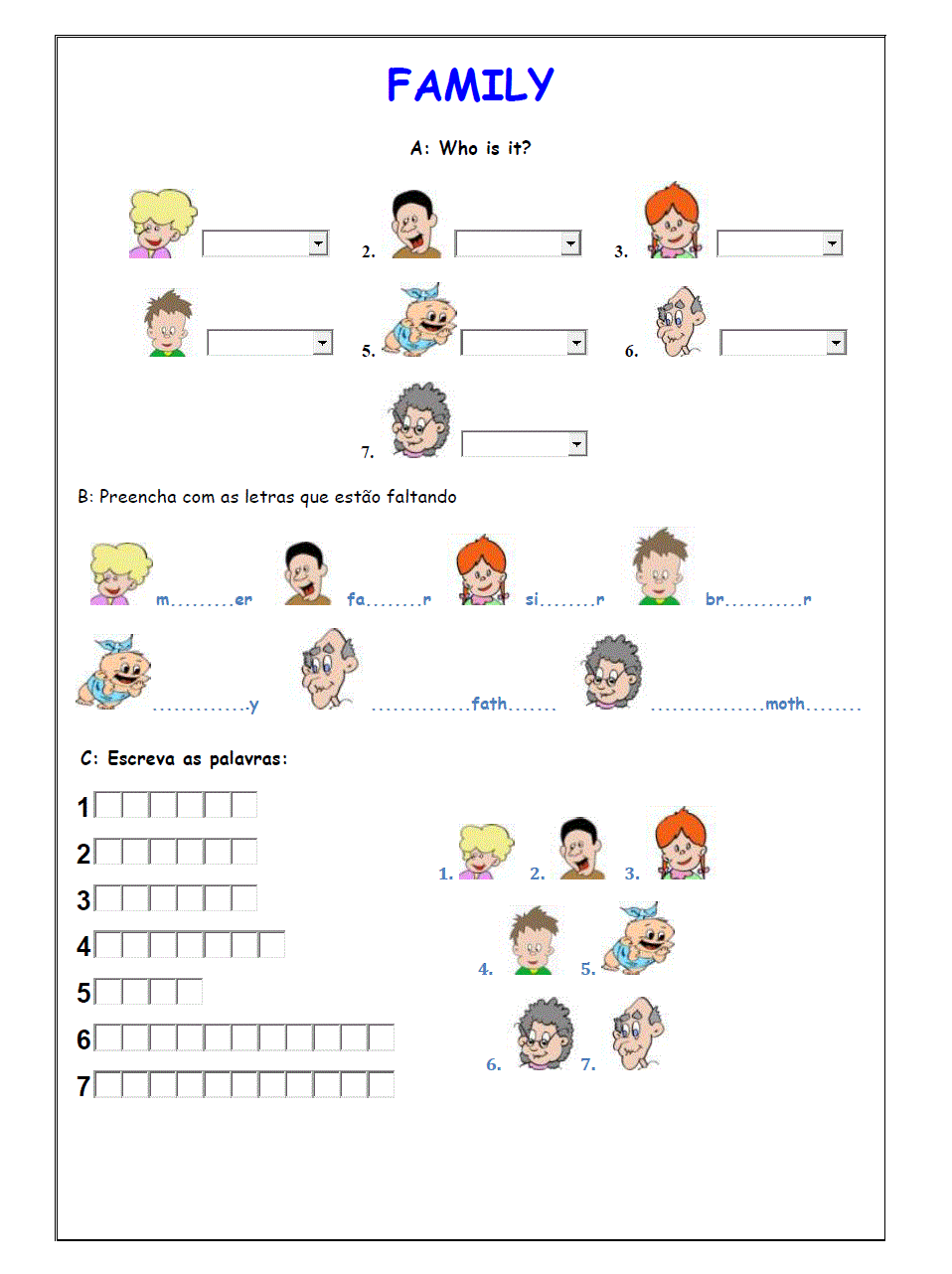
Atividade Membros Da Familia Em Ingles - FDPLEARN - Do I need advanced English to lead these activities?
No. Activities can be adapted to any level, using simple phrases, visuals, and repetition.
- How much time should each session last?
Even 10–15 minutes daily or 30–60 minutes weekly can be effective if consistent and enjoyable.
- Can these activities work for non-native English-speaking families?
Yes. They are designed to grow with the family, using the target language as a tool for connection.
- What if a family member makes mistakes?
Focus on communication first, gently correct when helpful, and celebrate effort to maintain confidence.
Família em Inglês | Membros da Família em Inglês
Nessa aula você aprenderá os membros da família em inglês, com o Amigo Mumu, essa é uma aula básica de inglês indicada para ...
